
For years, wastewater treatment plants quietly did their job behind the scenes—protecting public health by cleaning our water and keeping communities running smoothly. Today, those same facilities are stepping into an exciting new role. Thanks to advances in technology, growing sustainability goals, and strong federal incentives, wastewater plants are now becoming powerful resource recovery hubs that turn organic waste into Renewable Natural Gas (RNG).
At RINSTAR, we work alongside renewable fuel producers and RNG partners navigating this shift every day. One of the most exciting trends we’re seeing is how the Renewable Fuel Standard is helping wastewater facilities unlock new revenue by turning biogas into valuable compliance assets.
The Hidden Energy in Wastewater
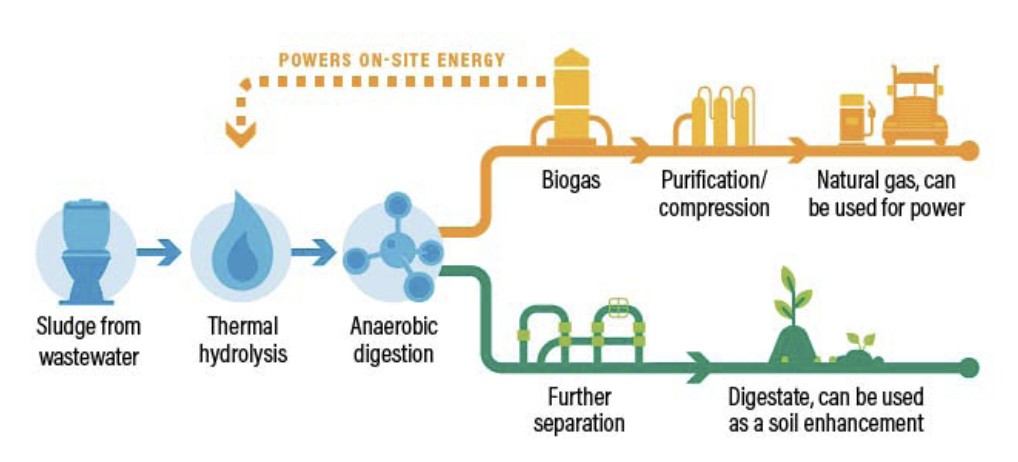
The process behind RNG production at wastewater treatment plants starts with anaerobic digestion. In this system, sewage sludge (the organic solids removed during wastewater treatment) is placed into sealed tanks where microorganisms break down the material in oxygen-free conditions.
For decades, the methane-rich biogas produced during digestion was viewed as a nuisance. Typically composed of about 60% methane and 40% carbon dioxide (plus impurities), this gas was typically flared or used only for minimal on-site heating.
Many wastewater plants now use advanced biogas upgrading systems that clean and refine this gas by removing moisture and impurities. The result is Renewable Natural Gas (RNG), a clean and high-quality fuel that works just like traditional natural gas and can be used for pipeline injection and transportation. When a WWTP injects RNG into a natural gas pipeline for transportation use (often as compressed natural gas or CNG), it becomes eligible to generate RINs.
Why Wastewater RNG Is So Valuable
- D3 Cellulosic Biofuel RINs:
RNG produced from municipal wastewater qualifies as cellulosic biofuel, the most valuable
category under the RFS. These RINs carry the highest greenhouse gas reduction threshold
(60%) and are often in short supply. - The Co-Digestion Opportunity:
Many WWTPs now accept food waste, fats, oils, and grease (FOG) in addition to sludge.
This feedstock typically generates D5 Advanced Biofuel RINs.
Environmental and Economic Benefits
The partnership between WWTP infrastructure and RFS incentives delivers dual outcomes:
1. Decarbonization
Methane is over 25 times more potent than carbon dioxide as a greenhouse gas.
Capturing methane from digestion and displacing diesel fuel in heavy-duty
vehicle fleets produces some of the lowest carbon-intensity fuels available
today and is often even carbon-negative.
2. Revenue Diversification for Communities
D3 RIN revenues provide municipal utilities with a stable, long-term income
stream, helping:
- Offset rising operational costs
- Stabilize water and sewer rates
- Fund infrastructure upgrades
- Reduce taxpayer burden
Real-World Success Stories
WSSC Water – Maryland (“Poop to Power”)
The Piscataway Bioenergy Facility opened in late 2024 at a cost of $271 million. It processes biosolids from multiple facilities to generate RNG sold to Montgomery County’s bus fleet.
- Annual Revenue: ~$4 million
- Gas Sales: ~$700,000
- Environmental Credits (RINs & attributes): ~$3.2 million. Over 75% of revenue is driven directly by RFS credits
Newtown Creek – New York City
Brooklyn’s iconic “digester egg” facility purifies biogas and injects RNG into the local gas grid through a partnership with National Grid. The plant also co-digests food waste from local schools and businesses.
- D3 RINs from wastewater
- D5 RINs from food waste
City of Phoenix – 91st Avenue (Arizona)
One of the nation’s largest wastewater-to-RNG projects, this facility processes over 3,250 scfm of biogas under a public-private partnership with Ameresco. The cities receive royalty revenue while Ameresco manages RIN commercialization.
- RNG is injected into interstate pipelines
- Displaces diesel in heavy-duty transport
- Generates massive D3 RIN volumes
Victor Valley – California
The Victor Valley Wastewater Reclamation Authority tripled digestion capacity through Anaergia’s Omnivore Project.
- Heavy use of co-digestion (FOG + food slurry)
- Generates both federal RFS RINs and California LCFS credits
- The facility now operates as a net energy exporter
The Future of Wastewater Is Renewable Energy
Wastewater treatment plants are no longer just the end of the urban waste pipeline. They are becoming the starting point of a powerful renewable energy supply chain. Through the Renewable Fuel Standard, municipalities are proving that environmental stewardship and economic sustainability can advance together. As technology matures, the future may even include hydrogen production and broader energy integration.
At RINSTAR, we help RNG producers and renewable fuel stakeholders navigate the complex regulatory framework of the RFS, from RIN generation through compliance and reporting. As more cities realize the full value of their waste streams, the role of wastewater in America’s clean energy transition is only just beginning.
Next Steps With RINSTAR
Wastewater-to-RNG projects bring enormous opportunity but RFS compliance, reporting, and RIN generation can be complex. RINSTAR removes that complexity.
- Track and manage D3 and D5 RINs with confidence
- Streamline batch uploads and transaction reporting
- Stay ahead of EPA policy updates and rule changes
- Ensure accurate compliance across RNG operations
📩 Have questions? Contact us at services@cfch.com or schedule a demo to see how RINSTAR supports your compliance journey
